
Class RA1, RA2, RA3, R3B & R3C Reflective Sheeting: Grades and Differences
- Manufacturing reflective vinyl and many other retroreflective sheeting since 2008
- Fully meets EN 12899 Class RA1, RA2, RA3, R3B & R3C requirements
- Cost-effective alternatives to 3M 3200, HIP 3930, DG3 4000, Avery Dennison T-6500, 11500 and ORAFOL Oralite 6700, 5900, 7900, 9900
MOQ 1 Unit | Fast Lead Time | 365 Days Max Support
What Are Class RA1, RA2, RA3, R3B and R3C Reflective Vinyl Grades?
RA1, RA2, RA3, R3B and R3C refer to retroreflective performance classes used in European and related road sign standards. They help buyers compare how well reflective vinyl returns light from vehicle headlights toward the driver.
However, these terms do not all belong to one classification system. RA1 and RA2 are classes used under EN 12899-1, while RA3 and R3B are associated with DIN 67520. R3C-UK refers to the UK National Annex to EN 12899-1.
The main differences relate to retroreflective performance (retroreflectivity), optical design & construction, service life, costs and applications. Buyers should check the applicable standard and test data or reflective vinyl sheeting manufacturers’ manual documents before selecting a grade.
What Is RA1 Reflective?
Class RA1 reflective sheeting material is a common or basic retro reflective vinyl option for road signs that meet the applicable basic retroreflective requirements. It is often used for standard traffic signs, parking signs and other permanent signs where the specified performance level requirements is met.
RA1 or R1 reflective vinyl use either glass-bead or micro prismatic technology nowaday. The popular products of class RA1 reflective include 3M 3430 EGP, Avery Dennison T-1500 / T-2500 ( T2000/ T-2000), or Orafol Oralite 6700/ 6710 Reflective Vinyl.
When sourcing RA1 reflective material, check the following points:
Standard compliance: Confirm that the product meets the required EN12899 class RA1 classification.
Optical performance: Review the retroreflective values in the technical data sheet.
Color and finish: Confirm the required colors and surface appearance.
Processing needs: Check printing, cutting and application requirements before ordering. For example, the beaded and flexible RA1 EG reflective film is very suitable for curve or similar uses such as delineators, cone collars or post bands.
Service life: 7 years engineer grade option as we supply and for cost-efficient applications, 5 years engineer grade option as we wholesale is available from Toptend.
Class RA1 reflective can be a cost-effective choice for suitable projects as it is the cheapest option among all the grades of EN12899 so far.
What Is RA2 Reflective?
Class RA2 reflective is often called RA2 material, refers to a retroreflective sheeting class used for RA2 road signs under EN 12899-1. It helps drivers see traffic signs more clearly at night by returning light from vehicle headlights toward the light source.
Compared with RA1, RA2 reflective generally provide higher retroreflective performance. They are widely used for RA2 warning signs, regulatory signs, direction signs, and other traffic signs that need good visibility in low-light conditions.
RA2 reflective vinyl is often considered for class RA2 traffic signs, directional signs and other road signage where higher visibility is required. And RA2 glass bead reflective film is good for uses on curve applications such as traffic cone collars, or delineator bands. Buyers should confirm the specified class, test results and approval certificates for their target market.
RA2 Reflective Technology & Performance
Class RA2 material use optical designs that return more light toward drivers than basic RA1 reflective material.
RA2 reflective sheeting film can provide about 3 times the retroreflective performance of RA1. For example, white RA1 sheeting must have a coefficient of retroreflection of at least 70 cd/lx/m², while white RA2 vinyl must reach at leat 250 cd/lx/m², measured at an 12′ observation angle and an entrance angle of 5°.
Class RA2 or R2 vinyl either use glass bead/ beaded or microprismatic technology, with the prismatic construction being much more popular and in greater needs, such as 3M HIP 3930, Avery T-6500, Oralite 5900. The cost efficient options are Toptend high intensity prismatic reflective sheeting H1630 (RA2) or high intensity RA2 glass bead reflective vinyl. All class RA2 material options must last for 10 years as standard outdoor durability required in EN 12899.
RA2 Reflective Cost and Selection
R2/RA2 reflective vinyl generally cost more than basic RA1 materials because they must meet higher retroreflective performance requirements.
For Chinese manufacturers, RA2 materials typically costs 40–70% more than RA1. The price gap between the two grades is often even wider for major international brands such as 3M, Avery Dennison, and ORAFOL (ORALITE).
What Is RA3 Reflective?
RA3 reflective vinyl is the classifications under DIN 67520 and European technical assessments specifying geometry, long-distance performance, and construction. RA3 or R3 reflective sheeting film is associated with highest performance retroreflective materials under DIN 67520. Products in this category often use advanced microprismatic technology such as full-cube designs, to return more light in wider angles toward vehicle drivers.
The RA3 materials must last 10 years outdoor as its standard service life and may be used for demanding high visibility road sign applications, including routes where drivers need to recognize signs from a greater distance. The required performance depends on the road authority, sign type and applicable standard.
What Are R3B and R3C Reflective
Class R3B and R3C reflective are terms used in specific European road sign classification systems. They are not simply two universal grades that follow RA1 and RA2 reflective sheets in one continuous scale.
R3B reflective is associated with DIN 67520, while R3C-UK refers to the UK National Annex to EN 12899-1. These classifications specify retroreflective performance under defined measurement conditions.
High-performance full-cube microprismatic sheeting is the technology used to meet demanding requirements. For example, 3M Diamond Grade DG³ is listed by 3M as meeting DIN 67520 classes RA3 and R3B reflective sheets, as well as class R3C-UK.
For buyers, the key point is to match the R3 sticker material to the required national classification. A product that meets one class should not automatically be assumed to meet another without supporting test documents.
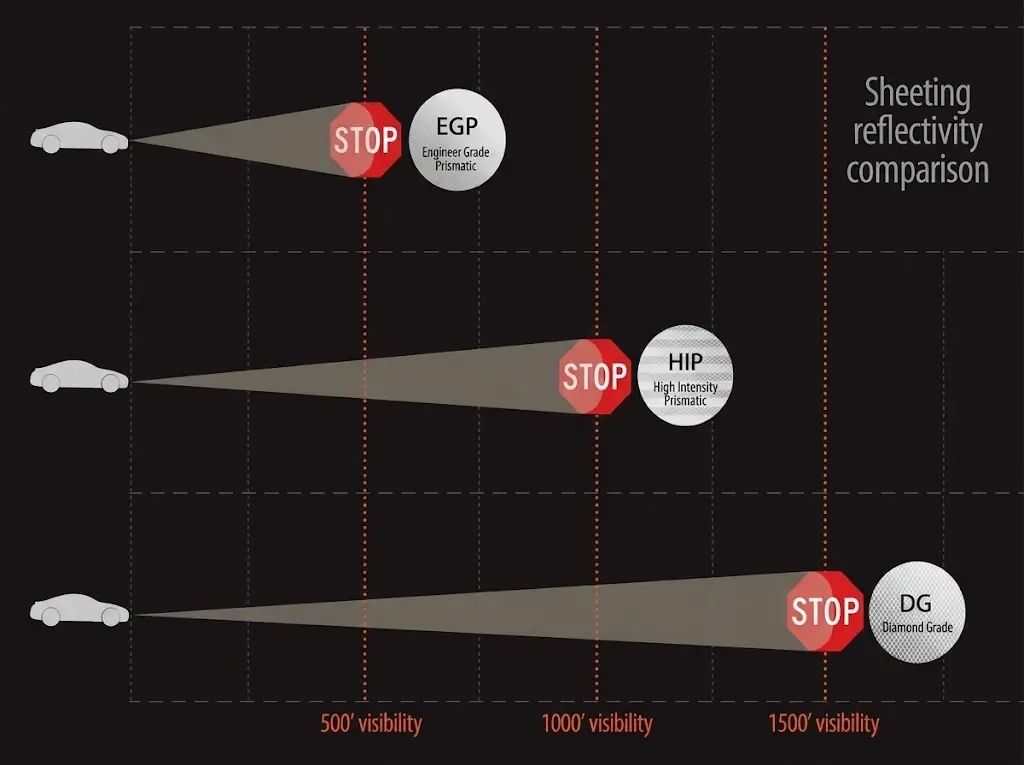
RA1, RA2, RA3, R3B & R3C Reflective Vinyl Comparison
Class | White retroreflectivity | Reflective technology | Indicative service life | Application examples |
|---|---|---|---|---|
RA1 | 70 cd/(lx·m²) at 0.2° observation, +5° entrance | Glass Bead; Microprismatic | Approx. 5–7 years | Local roads, parking signs, standard traffic signs |
RA2 | 250 cd/(lx·m²) at 0.2° observation, +5° entrance | Glass Bead; Microprismatic | Approx. 10 years | Urban roads, directional signs, higher-visibility traffic signs |
RA3 | 625 cd/(lx·m²) at 0.2° observation, +5° entrance | High-performance Full-cube Microprismatic | Approx. 10–12 years | Highways, major roads, large directional signs |
R3B | 580 cd/(lx·m²) at 0.2° observation, +5° entrance for a cited 3M product | High-performance Full-cube Microprismatic | Approx. 10–12 years | Road signs requiring the relevant DIN classification |
R3C-UK | Check the applicable UK requirements and product data | High-performance Full-cube Microprismatic | Approx. 10–12 years | UK road signs requiring R3C-UK compliance |
The coefficient of retroreflection is measured in cd/(lx·m²). The RA1 and RA2 vinyl material figures are the minimum initial white values listed in EN 12899-1:2007 at the stated geometry. The R3B figure is from a specific 3M product specification, not a universal minimum for every R3B product. Check the cost efficient Toptend Diamond Grade that meets the above specifications and save you costs.
What Should Buyers Check When Ordering Reflective Sheeting?
Before placing an order, buyers should confirm the required classification, product performance and other necessary details. A clear specification also helps reduce delays and avoids ordering material that does not meet the project requirements.
Check these points with the supplier:
Applicable standard: Specify EN 12899-1 or the relevant national requirements, e.g. the specific RA class.
Test documents: EU Compliance Certificates that supports the exact class required.
Optical performance: Confirm the retroreflective values for the required colors and measurement conditions.
Roll specifications: Check width, length, and color.
Printing and cutting: Confirm compatibility with the intended inks, plotters and sign-making process.
Supply terms: Check minimum order quantity, lead time, packaging and warranty conditions.
For distributors, sign makers and road safety contractors, the lowest unit price is not the only factor. Compliance, consistent quality and reliable supply also matter when comparing retro reflective vinyl suppliers.
TOPTEND Reflective Vinyl: A Cost-Effective Alternative to 3M, Avery, Orafol Oralite RA1, RA2, RA3, R3B, R3C Reflective
Contact TOPTEND NOW with your required classification, technical specifications and needed volume. We can help you review suitable reflective sheeting options for your road sign project at very competitive prices.
We manufacture and supply cost-effective alternatives to big brands such as 3M 3200, HIP 3930, DG3 4000, Avery Dennison T-6500, 11500 and ORAFOL Oralite 6700, 5900, 7900, 9900 and many more.
Working with us means: money saving, low MOQ, fast lead time, 365 days supports with product warranty.
