
HIP Reflective Sheeting: Performance, Cost & Service Life
- Manufacturing HIP reflective sheeting and many other reflective materials since 2008
- Fully meets ASTM D4956 Type III, IV and EN 12899 Class R2/RA2 requirements
- Cost-effective alternatives to 3M HIP 3930, Avery Dennison T-6500 and ORAFOL Oralite 5900 reflective sheeting
MOQ 1 Unit | Fast Lead Time | 365 Days Max Support
How Does HIP Reflective Sheeting Work?
HIP (High Intensity Prismatic) reflective sheeting uses a microprismatic structure to reflect light back toward its source. When vehicle headlights hit the sheeting, the prisms direct much of that light back toward the driver, helping road signs remain visible at night.
Unlike Engineer Grade (EG) beaded sheeting, which uses glass beads to reflect light, HIP sheeting uses more advanced prismatic technology to achieve higher retroreflectivity. This HIP reflective material makes it a common choice for highway signs, warning signs, and other traffic control signs that need better nighttime visibility.
Where Is HIP Reflective Sheeting Material Used?
HIP reflective sheeting is nowadays widely used for traffic signs that need higher visibility at night and in low-light conditions. Its prismatic design helps drivers see key road information from a distance more effectively.
Common applications include:
Highway signs: Guide signs, exit signs, and route markers.
Regulatory signs: Speed limit signs, stop signs, and other traffic control signs.
Warning signs: Signs for sharp turns, lane changes, and road hazards.
Work zone signs: work zone applications near road repairs and construction areas.
For sign makers and road safety suppliers, ASTM D4956 Type IV High Intensity Prismatic HIP sheeting material is one option for projects that require higher retroreflectivity than standard Engineer Grade sheeting. The right choice depends on local standards, road conditions, and project specifications.
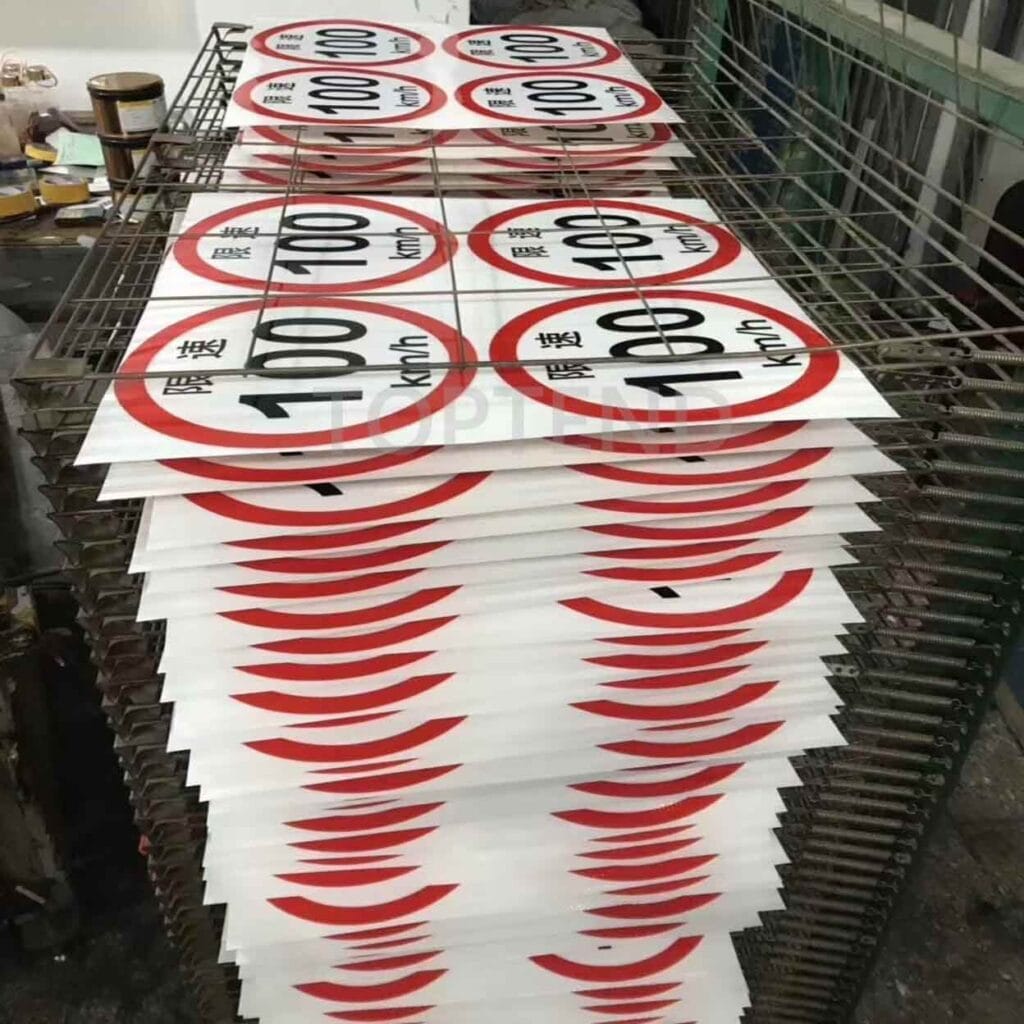
HIP Reflective Sheeting: Key Characteristics and Standards
Microprismatic Construction
HIP (High Intensity Prismatic) reflective sheeting uses a non-metallized microprismatic lens design. Tiny geometric prisms redirect light toward its source, unlike Engineer Grade (EG) sheeting, which uses glass beads. This HIP reflective sticker prismatic structure helps improve nighttime visibility for traffic signs more efficiently.
ASTM and EN Standards
HIP sheeting typically complies with ASTM D4956 Type III and Type IV and meets EN 12899-1 Class R2 or RA2 requirements as required in Europe. However, not every HIP reflective material product meets the same specification. Buyers should confirm the applicable standard, type or class before purchase.
Reflectivity: EG vs. HIP vs. Diamond Grade
HIP reflective sticker offers higher retroreflectivity than standard EG sheeting, while Diamond Grade (DG) sheeting, meeting ASTM Type IX and XI, can provide the highest performance. The table compares the minimum coefficient of retroreflection for three common colors.
| Color | EG (Type I) | HIP (Type IV) | DG (Type XI) |
|---|---|---|---|
| White | 70 | 360 | 580 |
| Yellow | 50 | 270 | 435 |
| Red | 14 | 65 | 87 |
Minimum coefficient of retroreflection (RA), measured at a 0.2° observation angle and −4° entrance angle. Unit: cd·lx⁻¹·m⁻².
These figures are standard minimum values, not guaranteed results for every product. Actual performance depends on the product, test conditions and manufacturers. Buyers should compare and make sure of the technical data before buying.
Service Life: Engineer Grade vs. HIP vs. Diamond Grade Reflective
The expected durability or service life of reflective sheeting varies by product, environmental exposure, installation conditions, and manufacturers. As a general guide, typical service life for the three grades are listed below:
| Sheeting Type | Typical Service Life |
|---|---|
| Engineer Grade (Type I) | 5–7 years |
| HIP (Type IV) | 10 years |
| Diamond Grade (Type XI or XI) | 10 years or longer, depending on the product and brand |
Actual durability and warranty coverage vary by manufacturer and product. Buyers should confirm the applicable warranty and service-life data before selecting HIP reflective sticker materials for long-term traffic sign projects.
HIP Reflective Sheeting Costs: 3M, Avery Dennison, Orafol and Toptend
Popular HIP reflective sheeting options include 3M HIP Series 3930, Avery Dennison T-6500, and ORAFOL ORALITE 5900 Series. These products are used a lot for traffic signs requiring high nighttime visibility nowadays worldwide.
For buyers seeking a more cost-effective alternative, Toptend High Intensity Prismatic reflective sheeting offers a competitive option for traffic sign manufacturing and wholesale supply. Depending on the product specification and order quantity, TOPTEND can help reduce material costs by approximately 35–80% compared with big brands, while providing suitable performance for the intended application.
When comparing suppliers, check the ASTM D4956 Type IV or En12899 Class R2/RA2 classification, retroreflectivity data, color options, service life, and project requirements to ensure the selected material meets your needs.
